


Malibu Presbyterian Church
Malibu Presbyterian Church
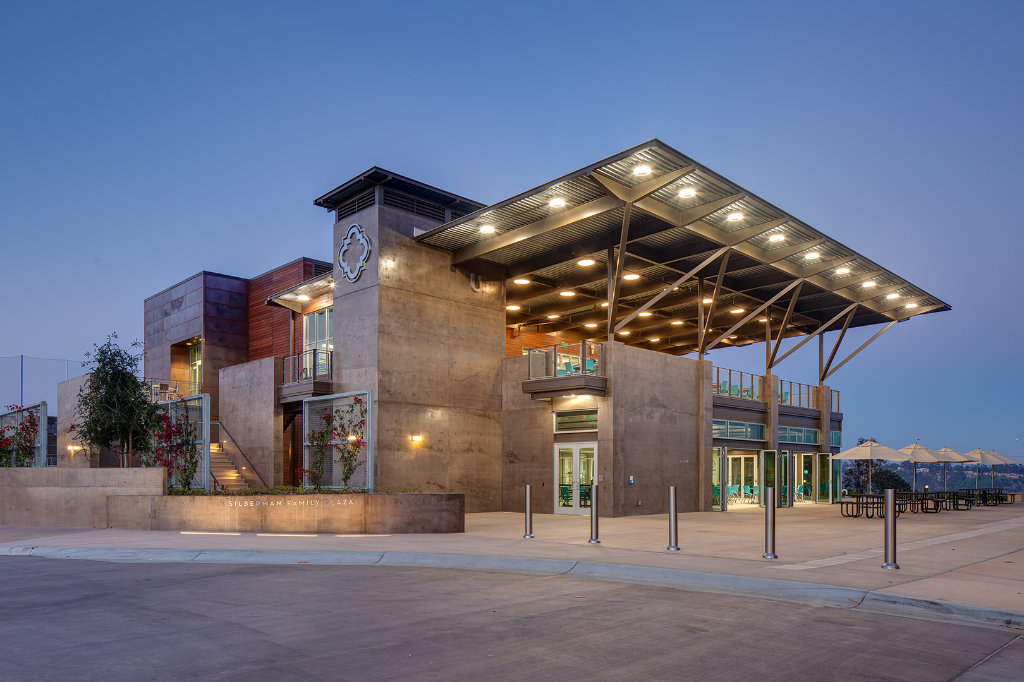
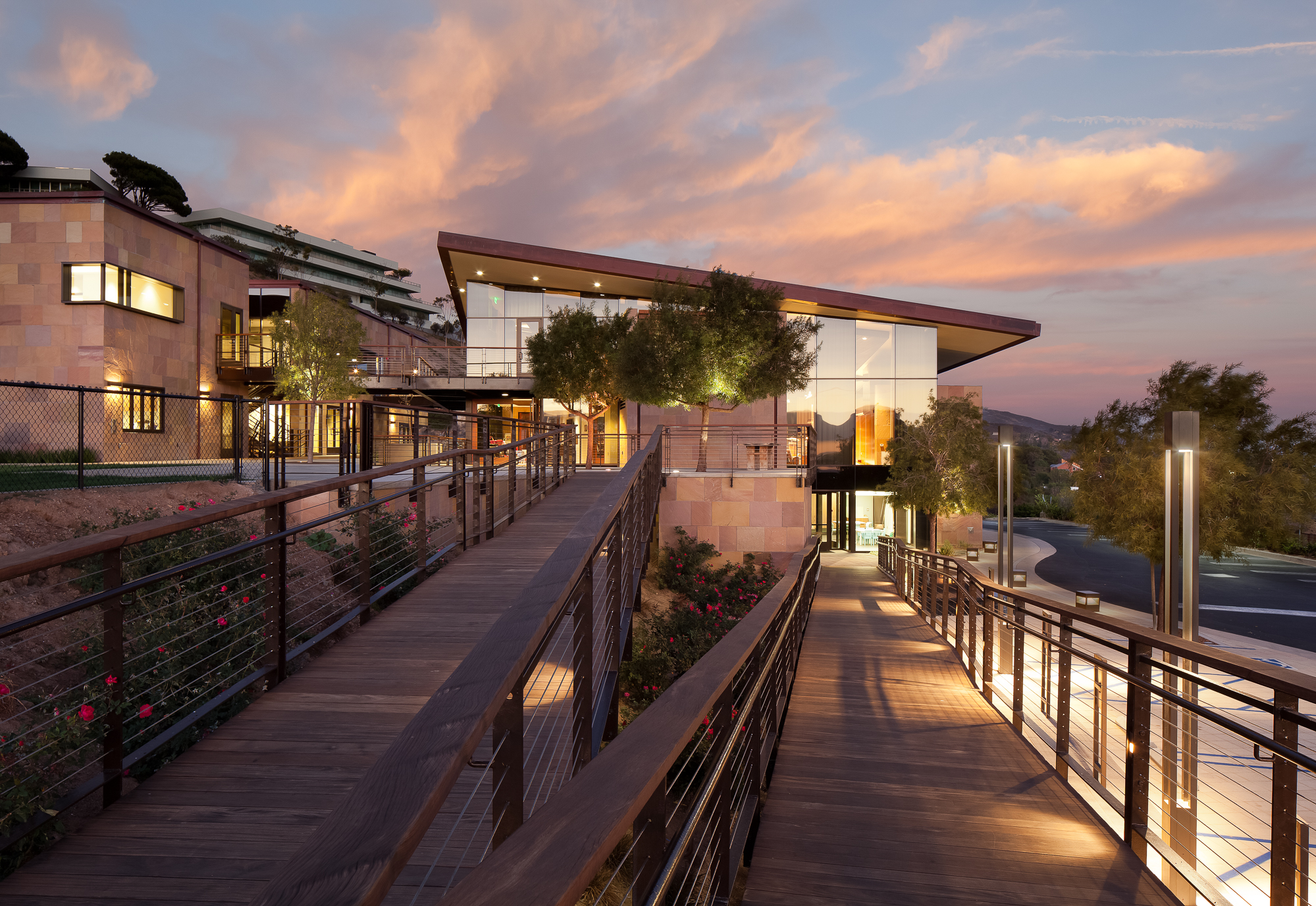
In 2007 the “Canyon Fire” engulfed Malibu Presbyterian Church which was fully in flames less than five minutes after the flames began licking at it, resulting in a complete loss. The overall process took four years, beginning with meetings with church leaders and members to come up with plans that captured their desire for a memorable place to worship. Domusstudio took a year designing the new structure, which utilizes the most current construction technology and integrated design features to enhance the worship experience.
This project presented some challenging components. Malibu Presbyterian is located in the most stringent seismic zone, highest wind zone, and highest fire zone in California. Acoustical and view/visibility issues dominated the design beyond the technical code items.
From the start of the design, we were faced with conflicting desires between maximizing the view and providing an acoustically dead space for a contemporary worship style. The final design was basically a glass box which maximized all the views and visually presented itself to the community as open and transparent – not a closed black box. We teamed with Shen, Milsom & Wilke, LLC. out of San Francisco to acoustically treat and deaden the space within and to acoustically protect the neighbors from sound exiting the building required by a city sound ordinance. The result is a contemporary theater style venue that is acoustically equivalent to a black box type facility with amazing views to the Pacific Ocean. The main space also had to be acoustically separated from rooms located below. The use of resilient dampening isolators on the lower level’s walls, mechanical ducts, lighting, fire sprinklers and other mechanical equipment will prevent sound from traveling from the Sanctuary floor down to the lower level where Sunday school will take place during worship
The seating area of the main floor and the balcony used arched theater seating to create a sense of community and maintain as few as rows as possible to create an intimate venue.
In regards to fire issues, two-hour fire resistant stone-clad exterior walls were chosen to meet the code and architectural criteria. A single-sloped copper roof and non-combustible materials throughout also helped meet the fire requirements. Meanwhile, tinted laminated glass, high-efficiency lighting and mechanical systems were incorporated to improve energy efficiency and reduce the structure’s carbon footprint.
Chen Residence
Chen Residence
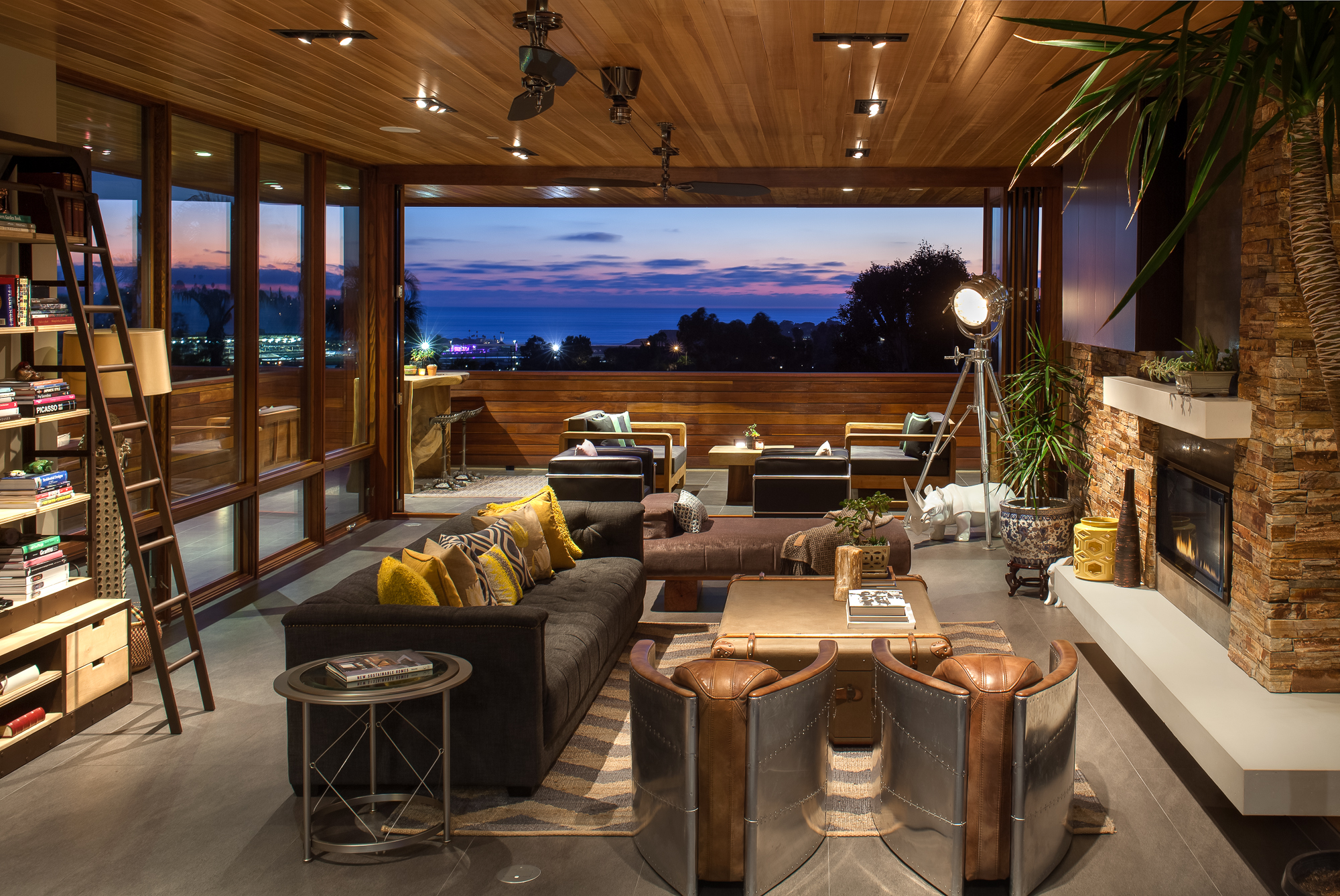
This home is situated on a hillside overlooking the San Dieguito Lagoon, the Del Mar fairgrounds and the Pacific Ocean. It is situated on a .66 acre lot. The project consists of a 4,650 square foot home with a large expansive deck, a 400 square foot Guest House and a 500 square foot garage. The cantilevered roofs cascade down the sloped hillside anchored from a stone clad tower.
The long overhangs provide sun control and prevent heat gain to a very transparent home. Building materials include stone, copper, ipe wood siding and plaster. Sustainable features include photovoltaic cells on the roof and a gray water collection and storage system for the site irrigation. The design was a collaboration between the homeowners and the studio with an array of design ideas. The is an example of biophilic design where the lines are blurred from the interior to the exterior spaces, satisfying the innate desire of humans to connect to their natural environment.
La Jolla Farms Residence
La Jolla Farms Residence
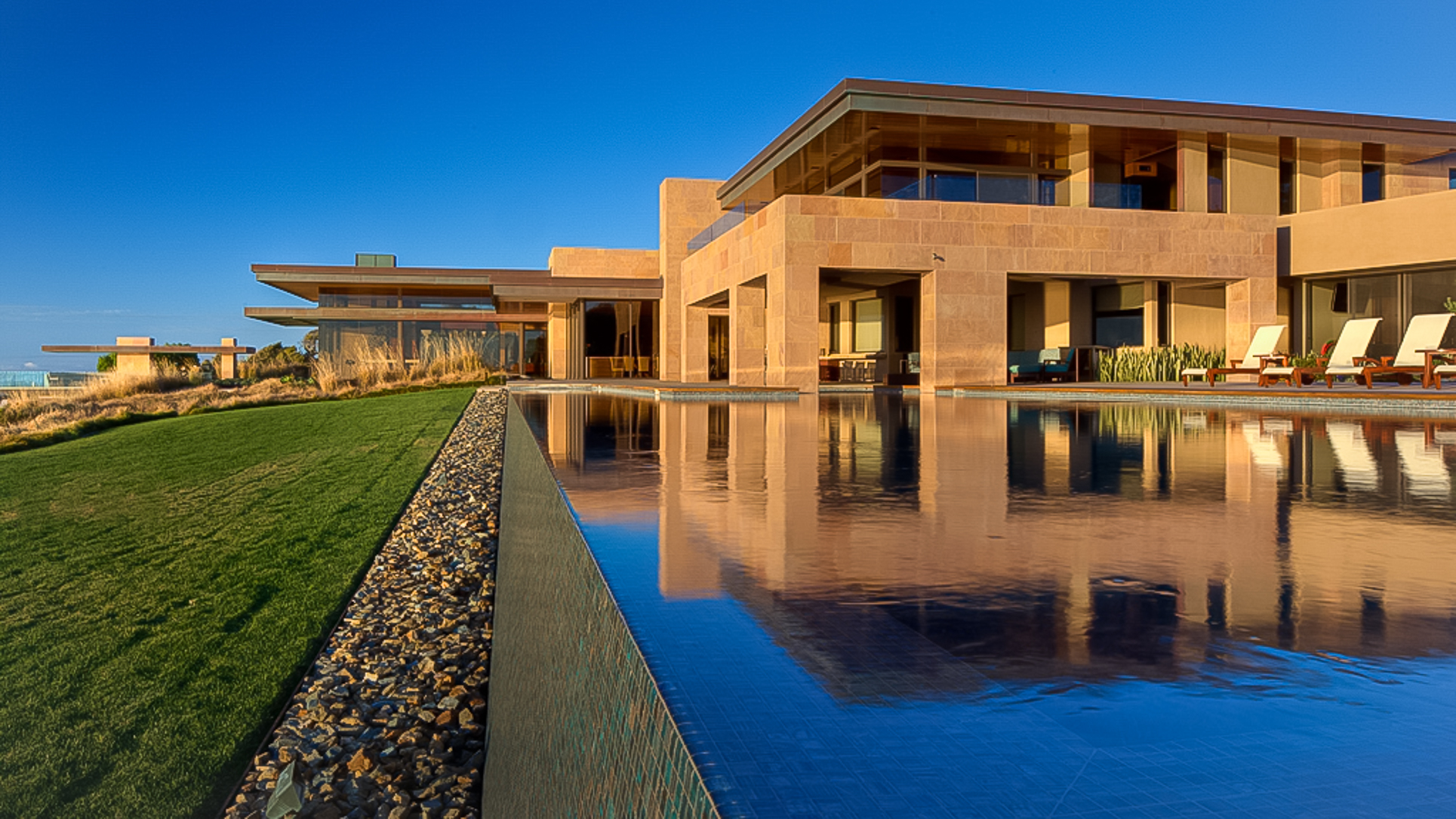
Recycle! Discipline and restraint are two words that are not often associated with a residence of this scale, and yet this approach is precisely the one taken for this remodel. This home is actually the recycling and greening of an original house built, and then once already poorly remodeled, on this four acre, bluff-top, ocean fronting site. The structure, the materials, and many of the components of the original house were recycled along with the entitlements. The simplicity of the forms and the limited material palate are extraordinary in this scale of home, and in this neighborhood of wealth.
A primary goal was to create a home for the long term for a sports-minded family that was quiet and private. In addition the home also needed to provide much more expansive space on occasion for large-scale charity fundraising events, and business entertaining. The house is designed into three zones, family living, recreation, and entertaining. The experiential sequence is of a continuous unveiling of transitional layers from strong and secure more perimeter benchmarks, to more progressively open semi-public, and then safe and private spaces for living.
A secondary goal was to restore and protect the fragile bluff high above the beach below. Planted in sweeping drifts, native and naturalized grasses replaced the mowed, water consuming, grasses of a previous three-hole private golf course. The grasses animate the bluff and ridges while retaining the slope. Additional plants that require little water were selected to provide patterns of color and texture when viewed from the house.
La Jolla Shores House
La Jolla Shores House
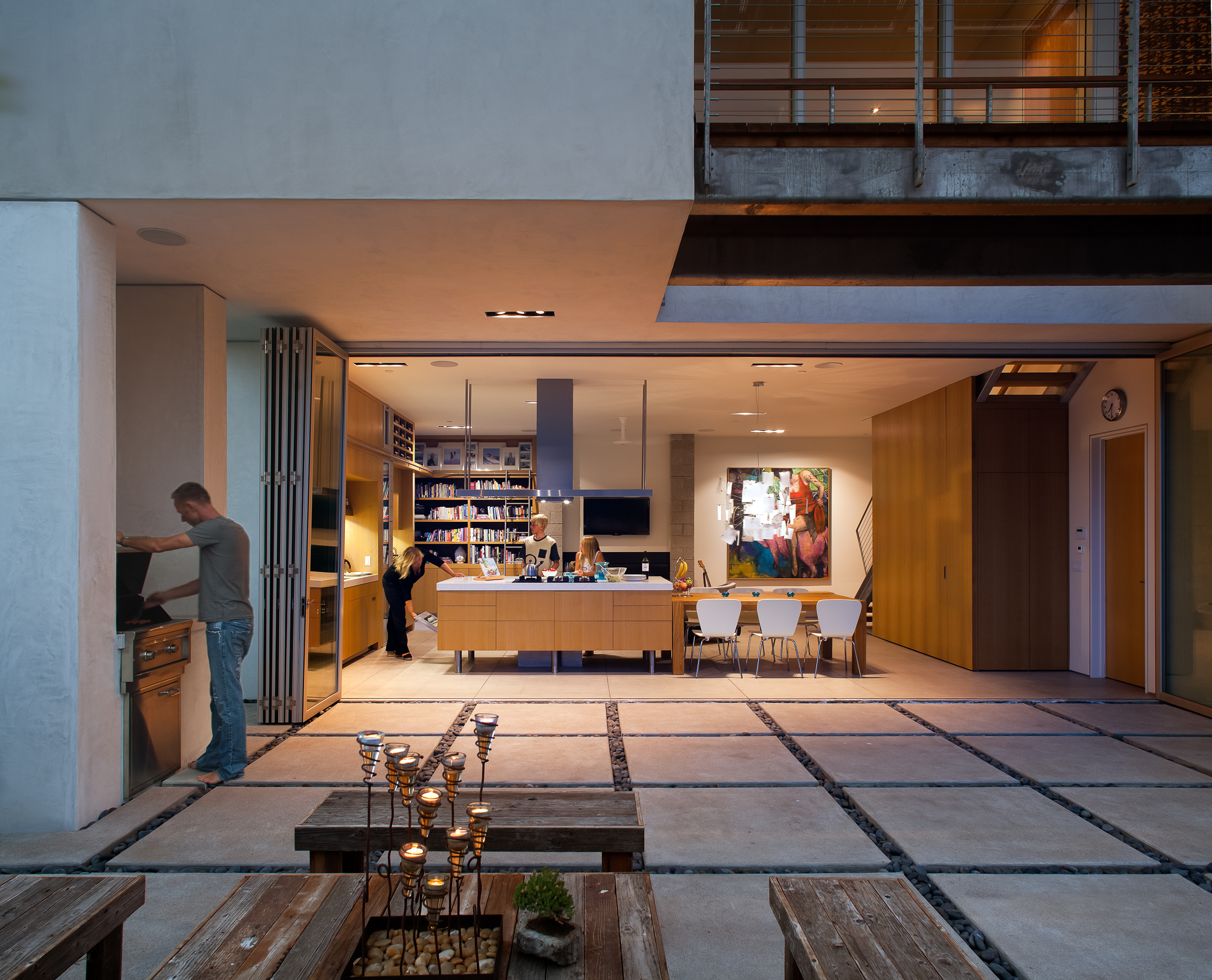
The challenges of this site, and goals of the client were formidable. The small site was on a small and fairly busy corner in a beach community, and the goal was a home with openness, yet privacy, and sustainability on a fixed budget. The design evolved to open outward and visually borrow space and capture views from the open two sides. The transparency allows the beach atmosphere to engulf the home. Very important strategic privacy is provided by window locations, low fencing and carefully placed vegetation. The two interior facades are very solid in contrast to the two open facades.
The sustainability of the home was achieved by both passive and technical means. Square footage was minimized and the simplicity and economy of forms, helped maintain the low construction cost. Material selections were chosen for economy, sustainability and raw aesthetics. The planks of the exterior bridge are recycled boards from the old Temecula water tower. The design decisions proved that a sustainable home could be built without additional costs.
Technical items of the home include all LED lighting, solar hot water heating for both domestic water and bedroom radiant floor heating. Perhaps the most obvious and visual technical features are the glass solar collectors which also work beautifully as the trellis elements for the house facing South and West. They become an integrated and aesthetic feature of the home, not an add-on, filtering the light while they produce electricity.
The plan is simple and open, allowing for spatial overlap and interaction to maximize the apparent size of the home’s more modest size and budget . The indoor/outdoor blending architecturally further expands and enhances the unique living possibilities that can only occur in this moderate climate and is an excellent example of biophilic design practiced by the studio.
The project won a San Diego AIA Merit Award, and was the grand prize winner of the Pacific Coast Builders Conference, Gold Nugget Award 2014 and is featured on dwell.com.
Girard + Kvasnicka Residence
Girard + Kvasnicka Residence
This original 3,639 sq/ft home was tired/neglected and was built at a time where the home was turned inward and broken up into smaller separate rooms. The home has panoramic views of the north slope of Mt. Soledad all the way west to the Pacific Ocean.
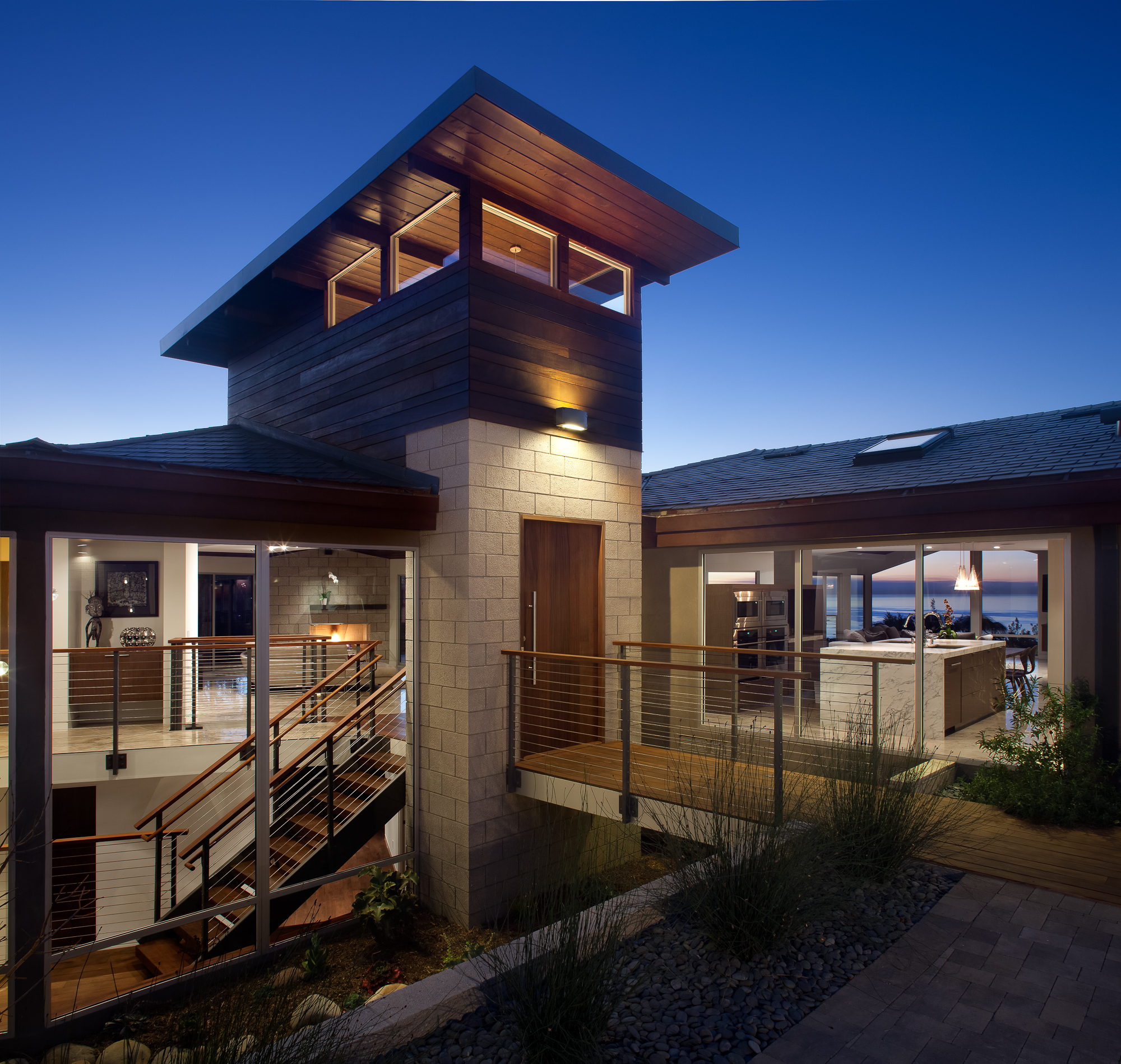
The family wanted a more open home, filled with light and a open floor plan suitable for family living that captures the available views from all the rooms. The south and west walls of the new design expands the view from almost every room in the house. A new facade of the home was accomplished by building in front of the existing walls with three CMU block and wood sided cubes.
One cube is the new Master Bathroom, another is a single car garage and the final is the new clear entry into the home – accessed via a bridge over the lower level landscaping. Connecting the entry and the Master Bathroom is a new 1.5 story central core which was pulled away from the existing exterior wall allowing for a new stairway connecting both levels, creating a transparent home and introducing daylight to both levels – replacing what was the darkest part of the existing home. A open concept plan was created on the main level which builds living spaces around a contemporary kitchen and an adjacent Play Room. A new ipe wood deck expands and connects all of the living areas on the canyon side, but pulls away from the house to allow daylight to the lower levels along with a skylight “coffee table”. A smaller more intimate patio off of the Kitchen/Family and Play Rooms includes a fireplace, grill and family dining table.
The owners have a taste for Modern furniture and this contemporary updated home has captured some of the Modern architecture feelings in a very unique, architecturally blended, family friendly home.
The new 5,506 sq/ft home maximizes natural daylight and utilizes LED can lighting which was used throughout the home to minimize electrical usage. The front sloping driveway uses pavers which allow water to infiltrate the site over a large area rather than drain and cause runoff of the canyon behind the house.
Solana Beach Presbyterian Church
Solana Beach Presbyterian Church
This existing church faced many issues common to churches that have been around for an extended time and have gone through decades of growth, changes, and expansion. Some of the buildings were old and obsolete, were crowded on the site, faced inward away from the streets, and circulation had become difficult and confusing (and inaccessible) as newer buildings and multiple small remodels had taken place. Parking was separated into four different and unconnected lots.
This project created an updated Master Plan for the full 7 acre campus. Discretionary entitlements including a Conditional Use Permit and Coastal Development Permits were secured through the city of Solana Beach. In phase one, the forty year old Pre-school was relocated and expanded from the back of the campus to a new location located in the public view on a prominent corner below the church offices. The lowest and most remote parking lot became the new playground and drop-off and front arrival point for the Preschool.
Phase two entailed a complete makeover for the upper campus, working around the two major existing buildings.
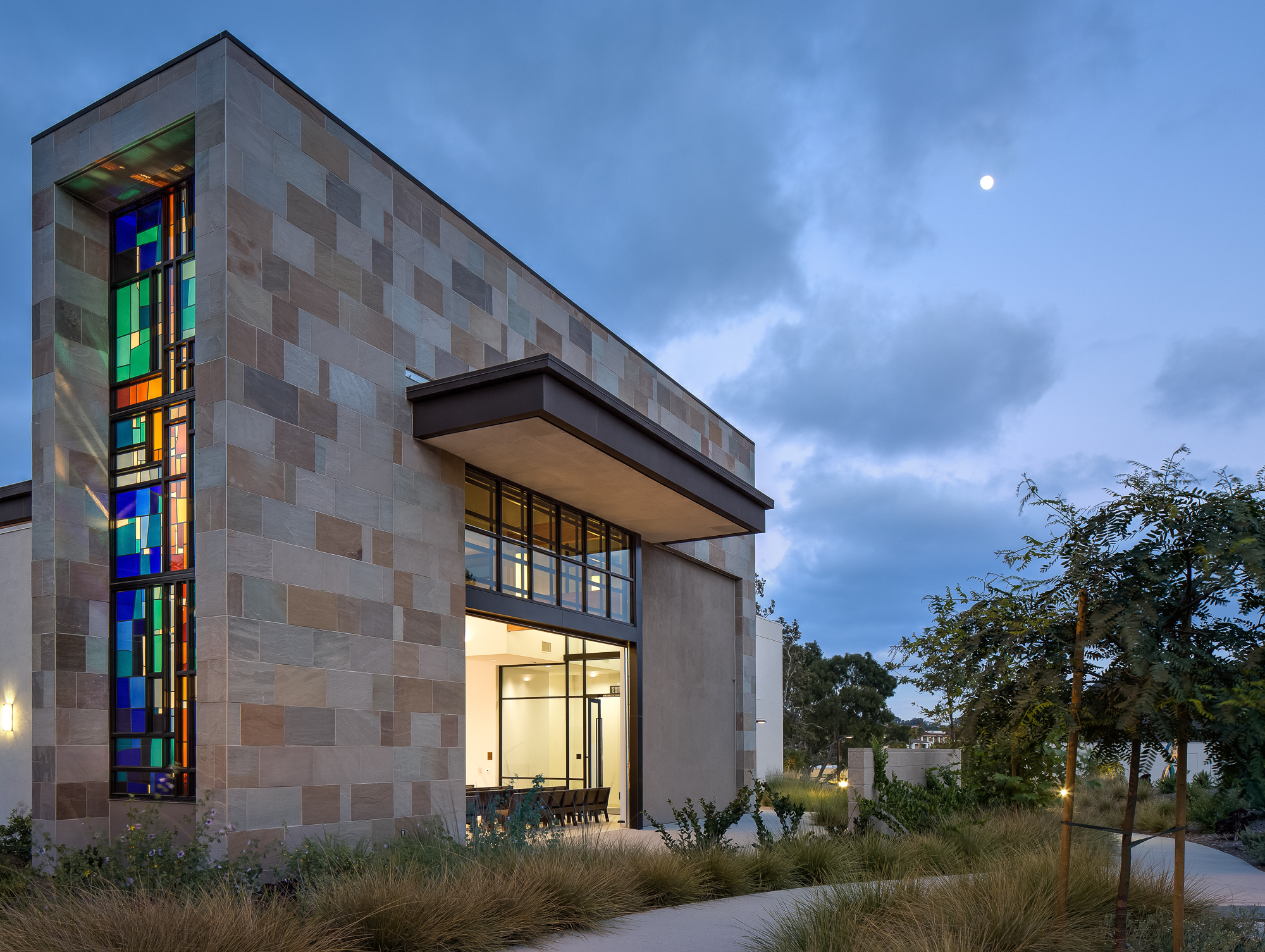
Vehicular and pedestrian circulation were redesigned for the site. A single connected parking lot surrounded the campus, with a majority of the cars now on the same level as the Sanctuary. A new 15,000 s. f. two story classroom and youth facility building was constructed and a new chapel was designed as the jewel of the campus, with a large stained glass window facing outward to the community towards the main intersection. All of the buildings now face and enter from the central gathering terrace and fountain. The central plaza is now surrounded by the all new landscape concept incorporating the existing specimen trees and vegetation, while now adding new drought tolerant, native vegetation.
La Canada Presbyterian Church
La Canada Presbyterian Church
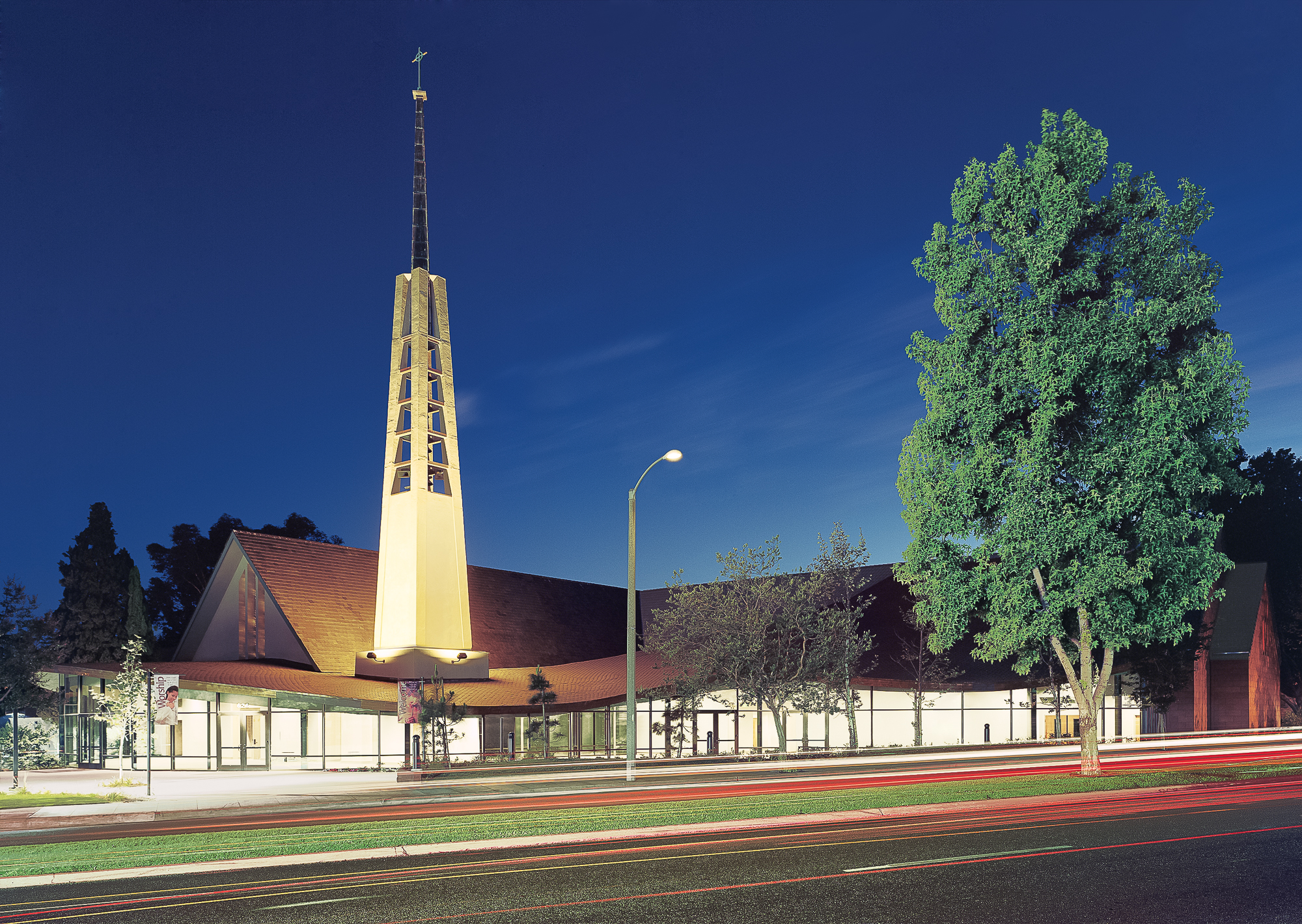
Sometimes things gradually change over time so slowly that we don’t even realize that it has occurred. This fifty year old complex of buildings contained many of the traditional and often now dated forms of the fifties and sixties. Set well back from the street, behind an overgrown landscape screen, the existing “A” frame Sanctuary had a center aisle with pews and an extremely small and obsolete narthex at the entry. An extensive and beautiful organ, with exposed copper pipes at the back of the chancel was well loved. Other one story buildings crowded the site, and all of them were accessed via a three foot wide sidewalk between two buildings. Only a seventy foot tall tower identified the church from the street. The church had become choked off from the street and from its own buildings in the rear of the site.
Phase One (of a three phased master plan) of this major addition and renovation added a new gallery Narthex to the traditional worship space that in turn connected to an all new contemporary Worship Arts Space, suitable for media, theater, and the arts. The new spaces are all near the main street frontage. The all glass gallery spatially connects the two worship venues, and also connects the church to the community with its adjacency and transparency to the street. The curved copper, shingled roof also dynamically attracts the community into the complex.
The second building is the new Family Life Center. Built on three levels, it contains a new Fellowship Hall seating 300 with an accompanying Kitchen on the main level, a Youth Center on the lower level, and large Meeting Rooms on the top floor. Building forms relate both to the existing traditional steep pitched roof buildings, and the new addition to the Sanctuary. A large outdoor light well and patio facing East allows light and air to permeate the lower level and removes any sense of “basement” to the youth facilities. Sound is well contained in this lower level and the youth can be very loud and active without disrupting others on the site.
A third/fourth building includes a new preschool and Christian Education classrooms, along with new administrative offices.
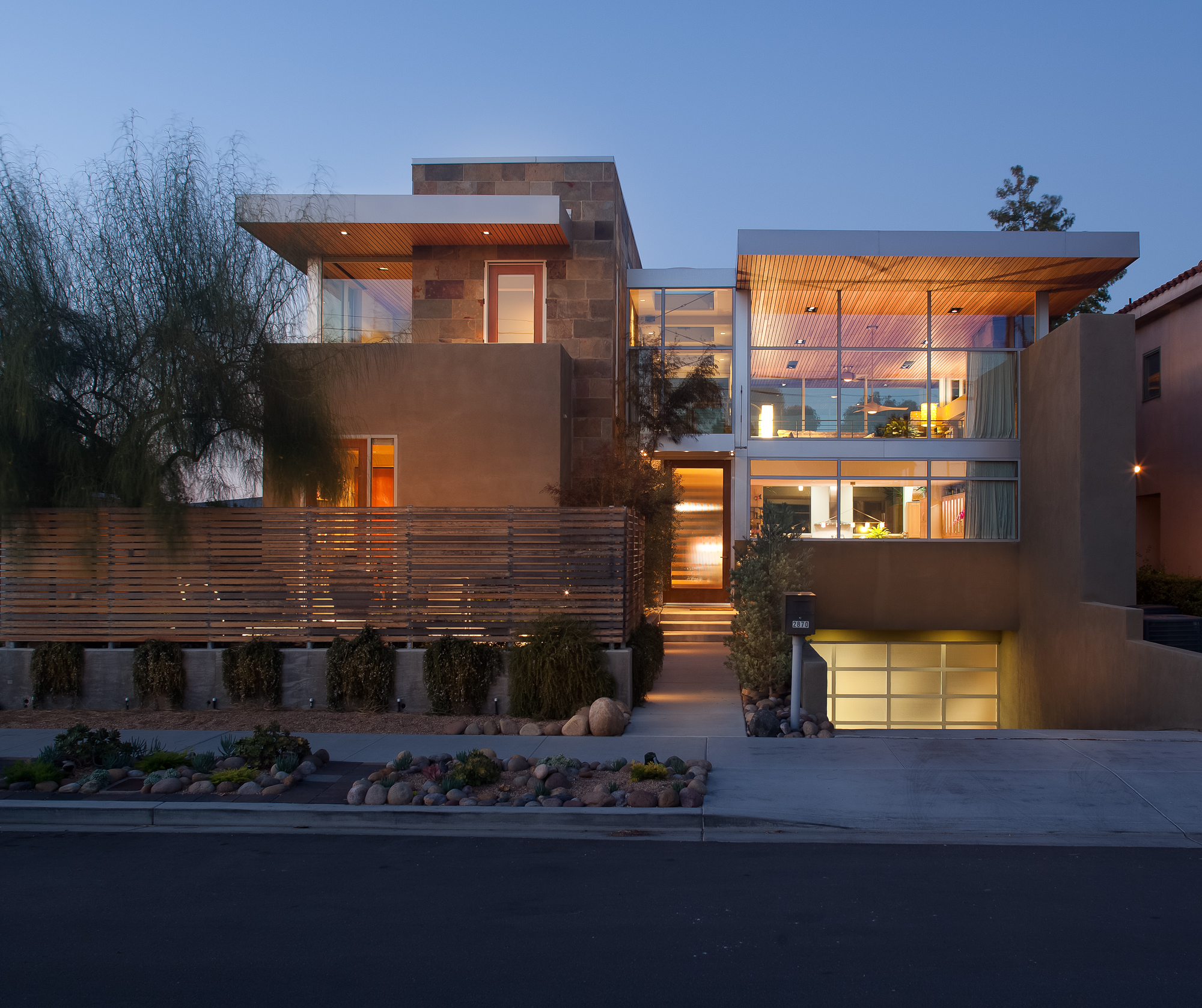
Fitzsimons Residence
Fitzsimons + Roman Residence
Situated in a long established neighborhood, this all new home on a very small lot faced the challenge of “fitting in” and still providing the owners with the contemporary home on a budget that they desired. Height and story limits, and bad soil dictated excavation and removal of the top layers of soil. These factors led to the solution for an underground garage and shop for the builder/craftsman. The client wanted natural light to flood the house with brightness. They also wanted multiple and alternate places to sit and work and contemplate, while still maintaining privacy.
To fit into the scale of the neighborhood, the forms were broken into pieces and separated visually to minimize the apparent size of and mass of the home. Forms were kept simple with most of the openings either South or North to maintain privacy and let in light. Materials were chosen to minimize maintenance, and wood was used on floors and ceilings and eaves. Clean, simple forms maintain the budget, and address the goal for a design that will endure.
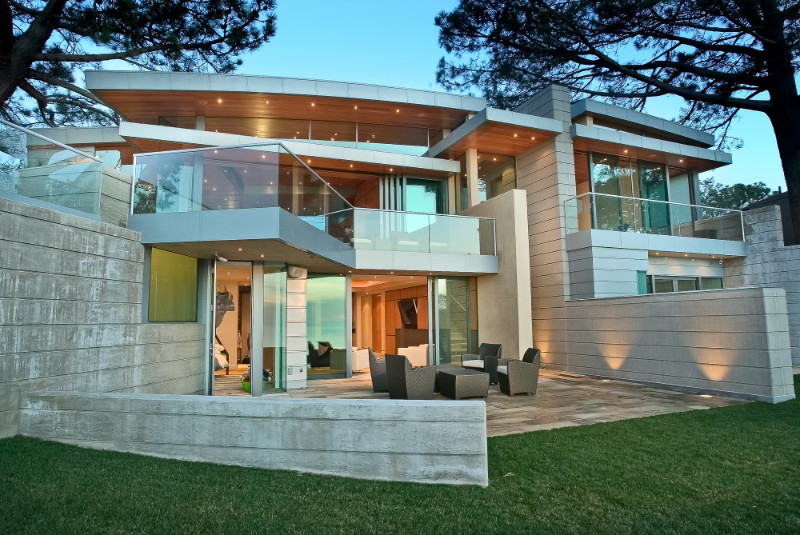
Canyon House
Scripps Canyon Residence
Sited between two huge Torrey Pine trees on a very narrow lot, transparency and privacy are juxtaposed for the design of this private single family residence. It is axially east-west transparent glass, and north-south private concrete. It is carefully articulated to meld with neighboring homes one third its size.
Our goal was to maximize the ocean and whitewater canyon view, give privacy from the close neighbors, and create indoor/outdoor flowing spaces protected from the wind. The major axis of the home points directly to the only white water view far below in the canyon. This axis is the circulation spine and organizing design element for the house. The spine is articulated with exposed concrete panels and it forms the backbone of the house. Surprises occur in both directions as one circulates from the spine.
The prevailing wind up the canyon directed the use of the home itself as a wind shield for the pool and yard placed eastward of the wind. The home sits appropriately in a neighborhood of 1,600 square foot one story homes, even though it has three times as many square feet. Preservation of the two magnificent Torrey Pines was paramount, and a strong determinant in the design, literally framing the house, connecting it to nature and providing a foreground frame to the scenic canyon vista. This is a home for San Diego living.
Categories
Recent Posts
Archives
- February 2019
- September 2018
- August 2018
- June 2018
- April 2018
- March 2018
- May 2014
- October 2013
- August 2013
- July 2013
- June 2013
- April 2013
- March 2013
- February 2013
- January 2013
- November 2012
- October 2012
- September 2012
- August 2012
- July 2012
- June 2012
- March 2012
- January 2012
- October 2011
- September 2011
- August 2011
- July 2011
- June 2011
- May 2011
- April 2011
- March 2011
- February 2011
- January 2011
- November 2010
- June 2010
- February 2010
- November 2009